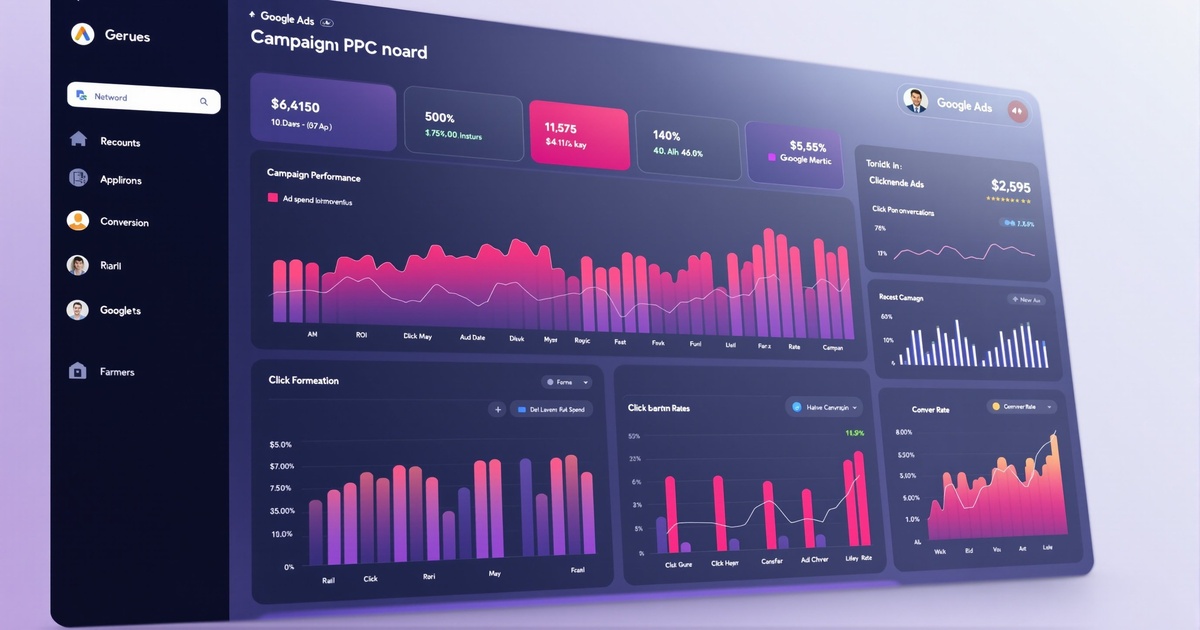
Google Ads management has evolved dramatically. With AI-powered bidding, Performance Max campaigns, and sophisticated audience targeting, achieving profitable PPC results requires expertise and continuous optimization. This comprehensive guide reveals how to maximize your Google Ads ROI in 2025. The Google Ads Landscape in 2025 - Google Ads has transformed into an AI-driven platform: Smart Bidding uses machine learning for optimal bid adjustments. Performance Max campaigns automate across all Google properties. Responsive Search Ads dynamically optimize ad combinations. Audience targeting combines first-party and Google data. Privacy-first measurement replaces third-party cookies. Video ads dominate discovery and engagement. Automation handles routine optimizations, freeing strategists for high-level decisions. Campaign Structure Best Practices - Proper campaign structure ensures optimal performance: Organize campaigns by business objective (awareness, consideration, conversion). Create tightly themed ad groups (5-20 keywords per group). Use Single Keyword Ad Groups (SKAGs) for high-value terms. Separate branded and non-branded campaigns. Create dedicated mobile campaigns when warranted. Implement campaign experiments for testing. Use campaign-level negatives strategically. Monitor cross-campaign keyword conflicts. Smart Bidding Strategies for 2025 - AI-powered bidding delivers superior results when configured correctly: Target CPA (Cost Per Acquisition) for lead generation. Target ROAS (Return on Ad Spend) for e-commerce. Maximize Conversions for new accounts building data. Maximize Conversion Value for revenue optimization. Enhanced CPC for manual control with AI assistance. Start with manual CPA or ROAS targets, then gradually let AI optimize. Provide sufficient conversion data (30+ conversions monthly minimum). Use conversion value for accurate ROAS bidding. Test different strategies in campaign experiments. Performance Max Campaign Mastery - Performance Max campaigns leverage all Google inventory: Provide high-quality asset variety (images, videos, headlines, descriptions). Include detailed audience signals (customer lists, website visitors, demographics). Set clear conversion goals and values. Use asset group testing for creative optimization. Monitor performance by asset type and placement. Exclude underperforming placements when necessary. Combine with Search campaigns for full coverage. Track performance against traditional campaign types. Keyword Research and Selection - Effective keyword strategy balances reach and relevance: Use Google Keyword Planner for volume and competition data. Identify buyer intent keywords showing purchase readiness. Target long-tail keywords for lower costs and higher conversion. Implement Dynamic Search Ads to capture missed opportunities. Use Broad Match Modified for controlled expansion. Regularly review Search Terms Reports for new keyword ideas. Create negative keyword lists to prevent waste. Organize keywords by funnel stage (awareness, consideration, decision). Ad Copy That Converts in 2025 - Winning ad copy combines psychology and optimization: Include primary keywords in headlines. Highlight unique value propositions clearly. Use emotional triggers (fear of missing out, social proof, urgency). Include specific numbers and statistics. Test different calls-to-action. Use ad customizers for dynamic personalization. Implement countdown timers for promotions. Pin important headlines to appear consistently. A/B test headlines and descriptions systematically. Match ad copy to landing page content. Landing Page Optimization - Landing page quality dramatically affects conversion rates and Quality Score: Ensure message match between ad and landing page. Use clear, compelling headlines that reinforce ad promise. Include trust signals (reviews, certifications, guarantees). Simplify forms to essential fields only. Optimize page speed to under 3 seconds. Implement clear, prominent calls-to-action. Use contrasting colors for CTA buttons. Add live chat for immediate assistance. Test different layouts and designs. Track user behavior with heatmaps and session recordings. Quality Score Improvement - Quality Score reduces costs and improves ad positions: Improve keyword relevance to ad copy. Ensure landing page relevance and quality. Increase historical click-through rate. Use relevant ad extensions. Segment campaigns for tighter theme control. Remove low-quality score keywords. Pause underperforming ads to improve account history. Optimize landing page experience. Improve site speed and mobile usability. Conversion Tracking and Attribution - Accurate tracking ensures data-driven optimization: Implement Google Ads conversion tracking properly. Set up enhanced conversions for improved accuracy. Track multiple conversion types (leads, sales, calls, downloads). Assign appropriate values to conversions. Use view-through conversion tracking. Implement cross-device conversion tracking. Choose the right attribution model for your business. Track offline conversions from phone calls or in-store visits. Use Google Analytics 4 integration for deeper insights. Audience Targeting Strategies - Sophisticated audience targeting improves campaign efficiency: Create customer match lists from email databases. Retarget website visitors with specific messaging. Use similar audiences for expansion. Layer demographics and interests for precise targeting. Create custom intent audiences based on keywords. Use in-market audiences for high-intent users. Implement life event targeting when relevant. Test audience bid adjustments systematically. Combine audiences with keyword targeting. Ad Extensions and Assets - Extensions improve ad visibility and click-through rates: Implement sitelink extensions to highlight key pages. Use callout extensions for unique selling points. Add structured snippets for service/product categories. Include call extensions with tracked phone numbers. Use location extensions for local businesses. Implement price extensions for transparent pricing. Add promotion extensions for limited-time offers. Use image and video assets in asset-based extensions. Test different extension combinations. Budget Management and Pacing - Strategic budget allocation maximizes campaign effectiveness: Set daily budgets 2x actual desired spend to avoid limiting. Use shared budgets for related campaigns. Implement campaign scheduling for optimal timing. Adjust bids by day of week and hour. Monitor impression share metrics. Increase budgets for high-performing campaigns. Pause or reduce low-performing campaigns. Test budget reallocation experiments. Plan for seasonality and demand fluctuations. Google Shopping Ads Optimization - Shopping campaigns require specific optimization tactics: Optimize product titles with key attributes and keywords. Use high-quality product images. Set competitive pricing. Maintain complete and accurate product data feeds. Implement product groups by margin or performance. Use negative keywords at campaign and ad group levels. Test different bidding strategies. Highlight promotions and free shipping. Monitor product-level performance regularly. Video Ads for YouTube - Video advertising captures attention and drives action: Create thumb-stopping video hooks in first 5 seconds. Use TrueView for action for conversion campaigns. Implement bumper ads for brand awareness. Test different video lengths (6-second, 15-second, 30-second). Include clear calls-to-action in videos. Use video action campaigns for lower-funnel. Target custom intent and affinity audiences. Retarget video viewers with display or search ads. Test different creative approaches. Local Campaigns for Multi-Location Businesses - Local campaigns drive foot traffic to physical locations: Connect Google My Business locations. Set location-specific goals (store visits, calls, directions). Use location-specific ad copy and offers. Implement location bid adjustments. Track in-store conversions. Use radius targeting around store locations. Test store visit conversion tracking. Highlight local inventory availability. Negative Keyword Management - Negative keywords prevent wasted spend on irrelevant searches: Review Search Terms Report weekly. Create negative keyword lists by theme. Add negative keywords at campaign and ad group levels. Use phrase and exact match negatives strategically. Implement broad match negatives cautiously. Maintain master negative keyword list. Review and update quarterly. Don't block valuable long-tail variations. Campaign Experimentation and Testing - Systematic testing drives continuous improvement: Test one variable at a time for clear results. Use campaign experiments for structure tests. Run A/B tests for ad copy and landing pages. Test different bidding strategies. Experiment with audience targeting. Try different ad formats and extensions. Test various budget allocations. Allow sufficient data for statistical significance. Document learnings and iterate. Google Ads Reporting and Analytics - Comprehensive reporting informs optimization decisions: Track key metrics: CTR, conversion rate, CPA, ROAS. Monitor Quality Score and impression share. Analyze performance by device, location, time. Review search term performance regularly. Track competitor impression share. Measure assisted conversions. Analyze conversion paths. Create custom reports for stakeholders. Use attribution models to understand customer journey. Common Google Ads Mistakes to Avoid - Avoid these costly errors: Running all keywords in one ad group. Neglecting negative keywords. Ignoring Quality Score. Sending traffic to homepage instead of relevant pages. Using only broad match keywords. Setting and forgetting campaigns. Not tracking conversions properly. Ignoring mobile optimization. Failing to test ad copy. Over-complicating account structure. Google Ads Success Checklist - Essential elements for profitable campaigns: Clear business goals and conversion tracking. Organized campaign structure. Strategic keyword selection with negatives. Compelling ad copy with strong CTAs. Optimized landing pages matching ads. Appropriate bidding strategy. Complete ad extensions. Audience targeting and remarketing. Regular performance monitoring. Continuous testing and optimization. Proper budget allocation. Mobile optimization. Quality Score focus. Attribution analysis. Documented processes and learnings. Results Timeline - Week 1-2: Campaign setup, tracking implementation. Month 1: Initial data collection and learning. Month 2-3: Optimization based on performance data. Month 3-6: Consistent ROI improvement through testing. Month 6-12: Mature account with predictable, profitable results. Google Ads management in 2025 combines strategic planning, AI-powered automation, and continuous optimization. Businesses that master this platform will capture massive market opportunity.
Admin
Digital Marketing Expert
Part of the expert team at Wisdek Digital Marketing, delivering results-driven strategies for businesses across Canada.
